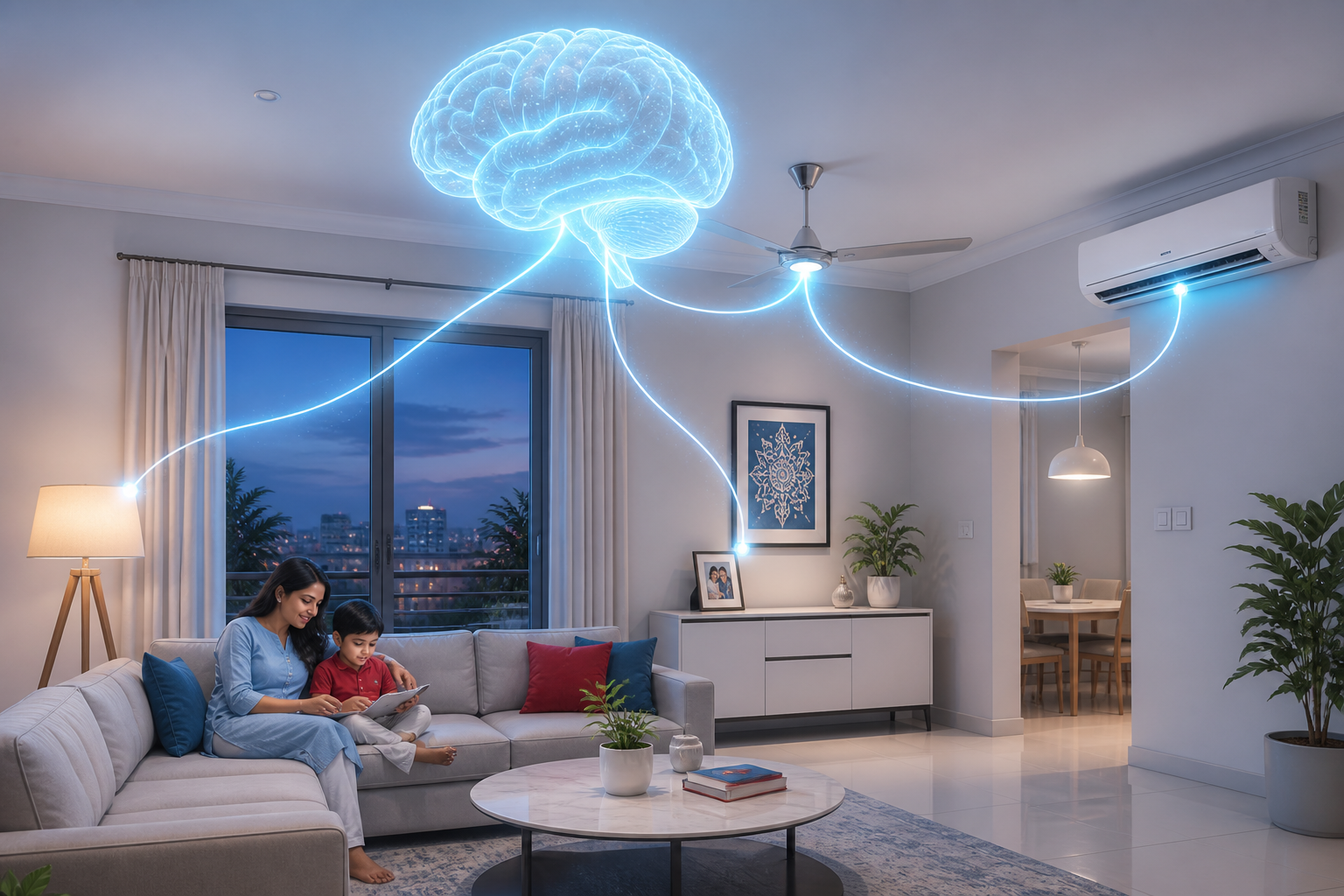
The brain
Automations, scenes, and schedules. If this, then that, in one Indian home.
The devices are hands. The brain is the habit.
Onwords does not sell a pile of gadgets. We sell a home that does the next right thing without being told twice. That "next right thing" has a name: an automation. Learn to write one in plain words and you can demo, sell, and support anything we make.
If this, then that
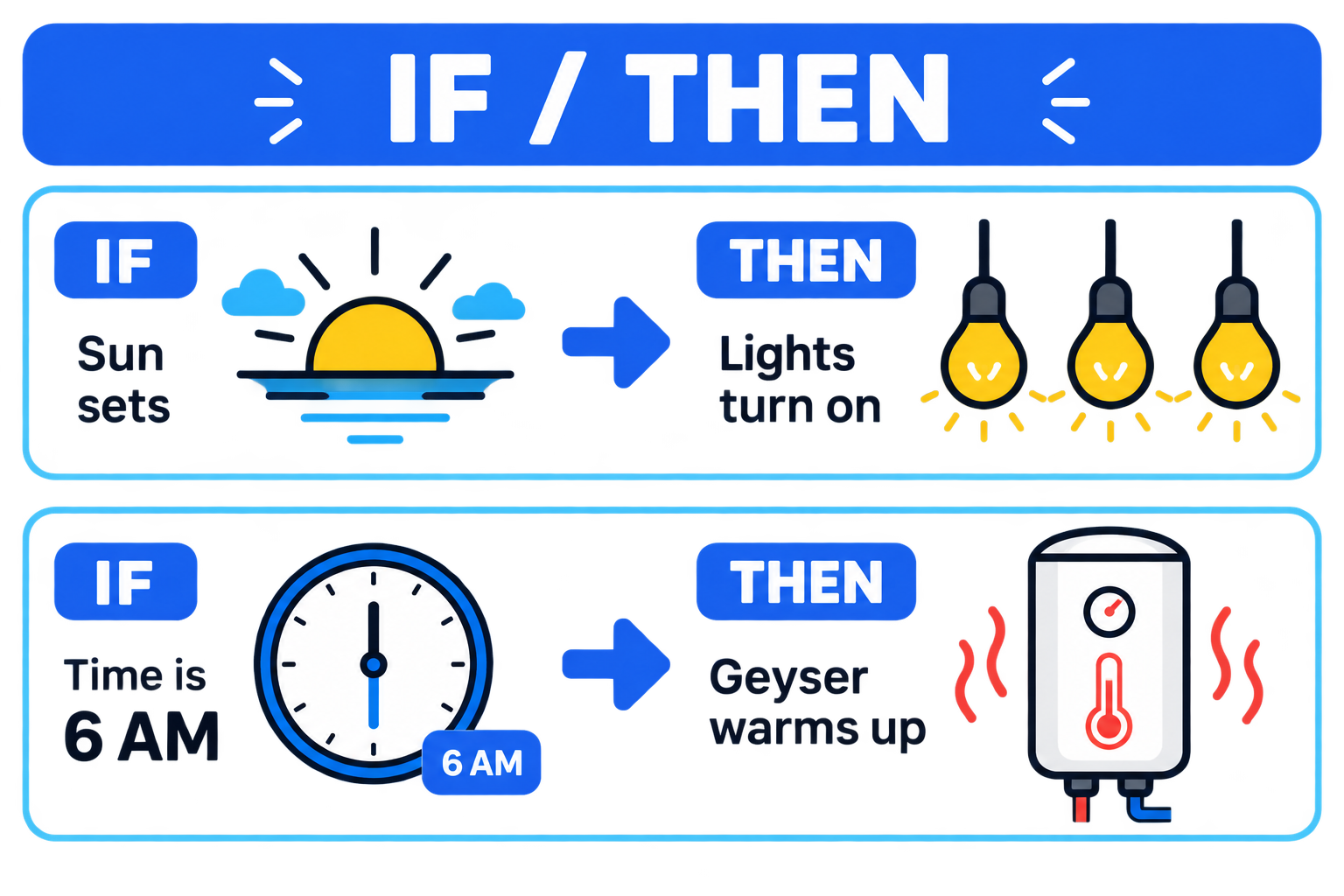
An automation is a rule with two halves.
IF the sun sets, THEN the porch light comes on.
IF the gate opens after 10 pm, THEN the hall lamp glows low, so nobody fumbles in the dark.
IF nobody moves in Appa's room for a long stretch at night, THEN the family gets a quiet care ping.
The IF is the trigger. The THEN is the action. That is the entire trick. Everything else is decoration.
Scenes: a name for a feeling
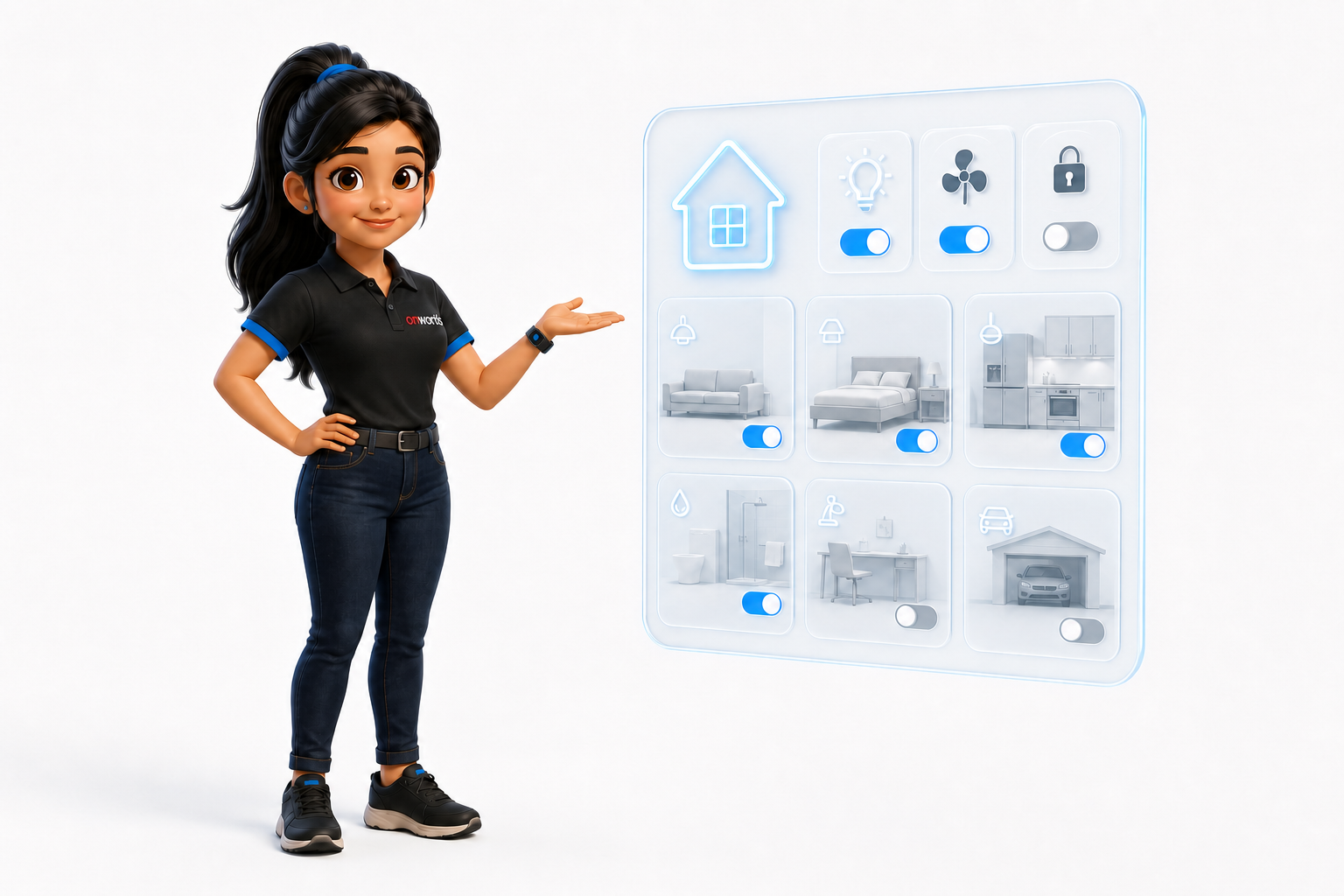
A scene is a bundle. One word, many actions.
Good Morning. Kitchen tube on. Bedroom curtains open. Geyser already hot.
Movie. Living lights dim. Curtains close. AC to 23.
Good Night. Most lights off. Gate checked. Bedroom lamp at 10 percent. AC to sleep-cool.
The family taps one name instead of seven tiles. Or they just say it.
You will set scenes on handover day. Name them in the family's own words. "Pooja time" beats "Scene 3" every single time.
Schedules: the clock as a friend
A schedule is a rule that uses time. Geyser at 6:00. Kitchen lights at 7:15 on weekdays. Outside lights at 18:00. Extra lights off at 23:00.
Indian homes already run on clocks: the school van, the office cab, the filter coffee. We simply give the house the same clock the family lives by.
But life changes. Exams come. Guests come. Summer comes. A schedule set once and forgotten goes stale, and that is exactly why Iniyal suggests edits later.
What the home learns
Tapping tiles is year-one smart home. A Living Home is quieter than that.
Iniyal watches real use. Within a week or two, patterns surface. The kitchen tube at 7 every day: that is a habit worth locking in. The balcony lights together at dusk: that is a scene the family already lives without naming it. The AC still cold after 6 am: that is a miss worth a gentle alert, never a scold.
I suggest first. The family taps apply. I never rewrite a live home in silence, because trust dies in one bad night.
A thirty-second demo you can say out loud
"When the sun drops, these three outside lights come on by themselves. You never open the phone. At bedtime, one Good Night button shuts the rest. And after a week, the home will notice your 7 am kitchen habit and ask if you want it locked in."
That is automation, scene, and learning, in that order, in language a grandmother nods at.
What is not the brain
The phone is not the brain. The phone is a remote.
Alexa and Google can flip a light, but they do not know this family's Tamil kitchen clock, and they do not know grandpa's no-motion care rule. The hub runs the rules even when every phone is in another city. And the wall switch still wins if the hub is off.
Success here looks strange: over months the family opens the app less, because the home already did the thing. That is the product working.
Why this matters at Onwords
Anyone can sell a 4-module switch. The close happens when the family sees their own Tuesday at 7:40 pm.
Sales: sell the Tuesday, not the relay count. Install: name devices in human words so the rules read like sentences. Support: when a rule fails, ask "what was the IF?" before you blame the app.
Remember: If this, then that. Name it. Then let the home keep the habit.
Check yourself
Make it stick.
Pick one answer for each question. Then check your score.